Learning Objective #4
The Double-Edged Sword of Digital Representation: Its Advantages and Limitations Then and Now
We live in a world where nearly everything can be represented digitally—from ancient manuscripts to medical records, artwork to emotions. Digital representation has become the lens through which much of modern life is understood, archived, and interacted with. But as powerful as digital representation is, it comes with both great advantages and important limitations. To truly grasp its impact, we need to look at it through both a historical and modern lens.
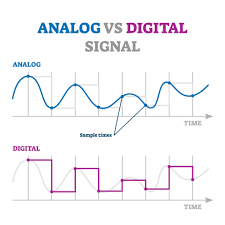
So, what is digital representation, exactly? At its core, it’s the use of binary code (0s and 1s) to symbolize real-world objects, concepts, or experiences. A photograph scanned into a computer becomes a digital image. A voice memo is turned into a sound file. Even a person’s identity—through profiles, photos, and metadata—can be digitally represented online. While this has brought remarkable benefits to communication, knowledge, and preservation, it has also raised important questions about authenticity, access, and depth.
Historical Context: Preserving the Past Through New Lenses
The idea of representing things symbolically is not new. Ancient humans etched images onto cave walls to capture stories and identities. Throughout history, we’ve relied on various forms of representation—oral storytelling, written records, printed books, maps, paintings—to carry meaning forward. But each method has its limits. Books can burn. Paintings can fade. Oral histories can be lost.
The introduction of digital representation—beginning in the late 20th century—marked a huge shift in how we preserve and share the past. Suddenly, libraries could digitize rare texts, museums could create virtual galleries, and historical archives could be shared globally at the click of a button. This has been a game-changer for education and research. Primary sources that once required costly travel to remote archives are now available online. Fragile artifacts that might be too sensitive to handle can now be viewed in high-resolution detail from a laptop.
Advantages in the historical context include:
-
Preservation and durability: Digital copies don’t degrade like physical ones. They’re immune to fading, tearing, or being lost to fire or flood.
-
Accessibility: Archives and materials once confined to elite institutions can now be accessed by students, scholars, and the public worldwide.
But even in historical contexts, digital representation has limitations:
-
Loss of physical context: A scanned image of a centuries-old letter doesn’t convey its texture, smell, or exact dimensions—all things that might offer subtle but important insights.
-
Technological obsolescence: Old digital formats can become unreadable without the right software or hardware (think floppy disks).
Modern Context: Our Digital Selves in Real Time
Fast forward to today, and digital representation is no longer just about archiving the past. It’s about representing the present—and even the self. Social media, video conferencing, digital avatars, and personal branding have all contributed to how we “exist” in digital spaces. In many cases, our digital identity is just as visible and influential as our physical one.
In the modern context, digital representation brings major advantages:
-
Connectivity and communication: Through platforms like Zoom, WhatsApp, and Instagram, we can share our lives and thoughts across continents instantly.
-
Creative expression: Artists, writers, and musicians can represent their work in digital formats that allow remixing, collaboration, and global sharing.
However, these new forms of representation also carry challenges that are different from the historical ones:
-
Curation vs. authenticity: People often present idealized versions of themselves online. The gap between who we are and how we’re digitally portrayed can be wide, leading to issues like imposter syndrome or social comparison.
-
Data privacy and control: Our digital representations are often stored and used by companies in ways we don’t fully understand or control. That profile picture you uploaded? It could train an AI facial recognition algorithm.
Striking a Balance: Between Utility and Humanity
Both historically and today, digital representation is about extending meaning beyond time and space. But every digital choice—from what we digitize, to how we digitize it, to how we present ourselves online—has consequences. We’re constantly making trade-offs between efficiency and depth, between accessibility and authenticity.
That’s why it’s important, especially in the context of the digital revolution, to cultivate digital literacy. We need to ask questions like:
-
What is gained and what is lost when we represent something digitally?
-
Who controls these representations and how are they being used?
-
Are we making space for nuance, or are we reducing things to surface-level visuals and data points?
In education, museums, journalism, and even our personal lives, being aware of these questions helps ensure that we don’t just adopt digital tools blindly. Instead, we can use them with intentionality—honoring the richness of the original while also embracing the possibilities of the new.

Conclusion: Embracing Digital Representation with Awareness
The essence of digital representation lies in its dual nature: it is both an enabler and a filter. It enables us to preserve, share, and connect in ways that were once unimaginable. But it also filters out the full sensory, emotional, and contextual realities of what’s being represented.
Historically, it has allowed us to rescue knowledge from decay. Today, it helps us shape identity, build connections, and participate in global culture. But across both timelines, the same principle applies: digital representation is a tool. Its value depends not just on the technology, but on how thoughtfully we use it.
In the end, as students of the digital revolution, we’re not just learning how the world is represented—we’re learning how to represent it ourselves. The question is not just whether something can be digitized, but how we digitize it, why, and for whom. When we stay mindful of both the power and the limits of digital representation, we gain the ability to shape a future that honors both innovation and integrity.
Created by: Nick Swaylik
Made with assistance from ChatGPT https://chatgpt.com/